Song of the Day: John K. Samson – One Great City (November 23, 2017)
Toronto has a vast underground mall that sprawls across the whole downtown, snaking its way under all the major buildings, hotels and shopping areas. It’s called the “Path” (a name borrowed from a similar set of tunnels in New York), and it’s the biggest complex of its kind in the world. Every time I’m down there, especially when it’s crowded, I think of One Great City, and its line about a thousand sharpened elbows in the underground. The people in the Path hustle along with their heads down, buried in their phones. Those looking straight ahead are grim-faced and frowning like they’re on their way to get a root canal, which, in a way, they are. They’ll walk right over you like you’re invisible. And everywhere, the hollow, hurried sound of feet on polished floor.
One Great City is about Winnipeg, but it could be about any Canadian city mired in the depths of winter, when the first sign of sunset is a darker grey breaking through the lighter one. I find this song to be almost perfect, with nary a wasted note or pointless lyric. It’s the sort of song that can change your mood, with its subtle chord shifts, its melodicism, and its graceful, tidy ending (I can’t think of song that comes to a more skillful, satisfying conclusion). There’s a wistfulness, an air of sadness and ongoing loss that hovers over its wry sentiments. It’s populated with people we recognize and understand, the weary clerk counting loonies in the dollar store, the frustrated commuter travelling the same route every day, the restless riders on the bus. It’s us.
Song of the Day: Fountains of Wayne – Troubled Times (February 19, 2018)
A gorgeous, poignant lament for a regretful heart that hopes against hope for a probably undeserved second chance. They broke up, and OK yeah, maybe it was his fault, he put her through all sorts of crap and then split, probably figuring on finding something better. Oh, boy. Now he knows he made a terrible, terrible mistake.
It’s only human that he dreams of getting her back, and of a time to come when they can remember it all as just a bit of a bump in the road. That can work, right? All he has to do is swallow hard and go for it, it could all be set right, maybe one day soon – but time is flying by, it takes so very much nerve even to approach her, and always the nagging question: why do tomorrow what you could never do?
They were masters of wistful melody, but Fountains of Wayne, and the irreplaceable chemistry between songwriters Adam Schlesinger and Chris Collingwood, are things of the past. They should have been so much bigger than they ever became.
Here’s a lovely live version from the NPR Tiny Desk Concert series:
Song of the Day: John K. Samson – When I Write My Masters Thesis (February 19, 2018)
There’s a strange loneliness to being a grad student, up late at night writing, hanging around the stacks, dozing in your little carrell, passing solitary hours up in the rare books collection, trying to finish something that’s difficult and doesn’t really matter. It’s almost dreamlike, the drifting, procrastinating, proofing of paragraphs that almost nobody’s going to read, and now and then thinking that you aren’t that young anymore, and wondering what’s next. John K Samson, himself an adjunct professor, knows it all so well.
This is the point at which those of us with no particular talent end up going to law school.
Song of the Day: Pete Townshend – The Kids Are All Right (May 15, 2018)
He started out as the enigmatic lead guitarist of a radical pop art/rock ‘n roll outfit that came on as dangerous, busting his instruments to bits after windmilling on his 12 string Rickenbacker until the tips of his fingers bled. The antics on stage – apparently mindless, but actually a sly (and very expensive) form of social commentary with its intellectual roots in the 20th century “auto-destructive” art movement – were almost enough to obscure the scathing intelligence and gifted songwriting of the “nose on a stick”, as he flailed away behind the rough-looking lead singer, competing for attention with the irrepressible berserker on drums.
The songs as recorded for radio play, it turned out, were often less compelling than the solo demos recorded as the templates, with Pete alone on guitar, his ringing voice clear as brass above the crafty chord progressions that complimented the soaring melodies. It turned out he was a better vocalist than the front man, and the songs often had a melancholy, philosophical quality that was somewhat lost when they emerged from the studio treatment.
In later years, the erstwhile proto-punk became elder statesman, and more or less invented the “unplugged” movement, appearing alone with his acoustic guitar to play the songs the way they’d been written, all those years ago. The Kids Are All Right, performed here at the Brooklyn Academy of Music, is revealed as something close to a wistful ballad, having masqueraded all those years as an angry and raucous anthem of disaffected youth, the frantic drums and slashing electric chords obscuring the almost resigned and ambivalent inner thoughts of the nervous, doubtful kid residing at the center.
Song of the Day: Paul McCartney – On the Wings of a Nightingale (March 17, 2018)
Back when they were cutting their teeth during hundreds of extended, pill-fuelled sets on stage in the joints of the Reeperbahn, the Beatles absorbed almost every conceivable pop music influence. Naming only a few, there was Elvis, of course, and early Motown, Goffin and King, Chuck Berry, Little Richard, Buddy Holly – the name “Beatles” was an homage to Holly’s outfit, the Crickets – and the Everly Brothers. It’s been noted that the tight harmonies of their first number 1 hit, Please Please Me, owe more than a little to the Everlys, and particularly Cathy’s Clown, a massive hit for the brothers Stateside.
It was very much the repayment of an old debt, then, when McCartney gifted the boys this lovely song, lending them a hand in a minor comeback in the mid 1980s. Throughout his career, McCartney has never been averse to giving other artists the fruits of his “A” game; early on, he delivered sure-fire hit A World Without Love to Peter and Gordon (perhaps to ingratiate himself with girlfriend Jane Asher, Peter’s sister), and later he gave Badfinger a leg up with Come and Get It, and Mary Hopkin a hit with Goodbye, which featured one of his most sublime melodies.
He was obviously inspired when composing On the Wings of a Nightingale for the Everlys. From catchy start to elegant end, it’s a clinic in the art of pop songwriting, and it showcases another of McCartney’s rare gifts, his uncanny ability to write songs in the voice of other composers, not so much imitating as channeling, creating pieces that are entirely novel yet completely in the other writers’ styles (and fit, usually, to rank among those writers’ best work). I’ll Be On My Way (recorded only during the Beatles’ BBC sessions) is pure Buddy Holly; the much more recent New is Brian Wilson to a “T”, while Friends to Go is band-mate George, My Valentine is Richard Rodgers, and Let Me Roll It is none other than John, right down to the “bathroom voice” that Lennon favoured in his early 70s studio work. On the Wings of a Nightingale is Phil and Don all over, and just as With a Little Help From My Friends was composed specifically to suit Ringo’s vocal range, Nightingale was designed to exploit the Everlys’ particular talent for vocal harmonization. This is perhaps not so obvious in Paul’s demo version, attached above, but you can hear how Phil and Don made the most of the song’s construction in their more energetic version, below, which also reflects the influence of producer Dave Edmunds.
Song of the Day: Benny Goodman – Sing, Sing, Sing (With a Swing) (March 25, 2018)
The quintessential Swing Era song, Sing, Sing, Sing (With a Swing) was written by Louis Prima in 1936, and recorded by Benny Goodman and his orchestra in 1937. Not only did it become Goodman’s signature piece, it grew to represent the sound of those times for all the generations that have come since. Whenever anybody is trying to evoke the Swing Era in films or on TV, they resort to it, or something written to sound just like it.
Back when I was a kid in the Sixties, listening, if memory serves, to the Monkees and the Box Tops, my Dad decided I needed to hear some real music. Out came his classic 1938 recording of Goodman and the band at Carnegie Hall. I suppose I could have decided to rebel, you know, on principle, but man, you’d have had to be made of stone to resist Sing, Sing, Sing. Goodman and the boys really cook, propelled along by an indescribable rhythm supplied by the immortal Gene Krupa, drumming in a manner that simply can’t quite be replicated by anybody else, and never could. It gets you right in the most primordial part of your brainstem. That’s real drumming, Dad told me, and explained how Krupa was the greatest, simply the greatest, way better than that showboat Buddy Rich. When people went on about how Buddy Rich was the bee’s knees, I was not to believe it. Krupa. Plain and simple.
Just look at him. Dad was right, wasn’t he?
It’s more than a little disquieting to realize that at the time, Dad was about 20 years younger than I am now, and amazing to think that a record from only 30 years prior could have seemed like a message from another planet, so removed was it from the stuff we were then buying on 45s. I mean, at the time of writing, U2’s Joshua Tree was more than 30 years ago, and maybe it’s a sign that I’m out of touch, but I don’t sense any sort of gaping generation gap between that album and today’s output. In the Sixties it was different. Things were moving fast, back then, and the changes were radical. In my father’s lifetime, they were transitioning from tube radios to solid state colour TV, from scratchy 78s to long playing vinyl in glorious stereo over expensive hi fi consoles, from trains to supersonic airplanes, from Buck Rogers to real astronauts reaching for the real Moon. The Moon. It must have been dizzying.
The changes occurring in popular music were just about as great, but it wasn’t that Dad thought the new stuff was all crap by definition. He was a big fan of Simon and Garfunkel, and he appreciated the Beatles. There were, however, certain acts he really, viscerally disliked – among them was Chicago, a favourite of my brother’s (and ironically the nearest contemporary equivalent to the big bands he adored), whose shrill horn arrangements used to set his teeth on edge. He cringed whenever Mark slapped them on the platter. I can still see Dad, frozen in a state of near ecstatic relief, standing outside Mark’s bedroom door, after the record changed from something like Chicago to Creedence Clearwater Revival doing Down on the Corner. “That’s what I mean“, he told me, almost whispering. “There! That’s the real deal.” It was as if he didn’t want to move, in case he broke the spell and it’d be back to 25 Or 6 To 4.
No, Dad wasn’t the sort to claim that nobody did anything good anymore, like they did back in the day. There was, however, stuff from back in the day that deserved to be remembered and admired, and there was indeed modern crapola that couldn’t hold a candle to it.
There was, Dad. I know it.
It’s an amazing stroke of luck that the band’s performance of Sing, Sing, Sing was captured in relatively high fidelity on film, and looking at it now, I’m no less struck by it, no less in awe of the musicianship and the strength of the composition, than I was back in 1967, when I first heard it played on the aural meat-grinder we then had for the purpose. It was no stereo, that thing. It was barely a record player at all. It was the kind of portable monaural turntable/speaker/hinged box combination that had a pressed steel tonearm weighing two and a half pounds, augmented with a silver dollar or two taped to the head, the better to ensure that the roofing nail it used for a needle wouldn’t skip when encountering cracks in the record.

A stout pressing of the day – (cue Grandpa Simpson) they used to press them thick back then – was good for about 10 plays before the grooves wore down to nothing. You could almost see the vinyl shavings being peeled off the disc.
In the attached clip, that’s the magnificent Harry James on trumpet, while Goodman throws in his usual virtuoso turn on clarinet, and boy are the guys tight, and obviously enjoying the bejeebers out of their own masterful ensemble playing. Yet it’s Krupa that mesmerizes. I’ve heard many, many recorded attempts to reproduce that rhythm, all of them OK, more or less, but all if them failures.
It can’t be done.
Song For a Christmas Night: Skydiggers – Good King Wenceslas (December 25, 2017)
Despite having recently posted a screed against the awful and sometimes pernicious banality of holiday music, I felt inspired, this Christmas night, to offer something to acknowledge that however confident the case that supports it, a rule that admits of no exceptions is simply dogma, and thus immediately suspect.
In the attached interpretation of the classic Yuletide song, the Skydiggers manage to remain true to the original while effecting an extraordinary musical rejuvenation. If you want to get into the spirit of the Christian ideals that so often seem forgotten in the organized practice of Christianity, this is the thing. You may find yourself, as I did, really listening to the words for the first time, and finding hope in its sorely needed message of decency and kindness.
The arrangement is both moving and understated. The trumpet accompaniment in particular is sublime, and a little mournful, perhaps bringing to mind all those who never benefit from the sort of charity offered to this poor peasant by his humane and caring monarch, that stormy night of the second day of Christmas, over a thousand years past.
Merry Christmas, everybody. May the new year lift our spirits as powerfully as 2017 made them sink.
Song of the Day: Joel Plaskett Love This Town; Beyond, Beyond, Beyond (April 12, 2018)
A tall glass of homesick for my fellow expatriate Maritimers.
I was first captivated by this song while sitting in the stands on the Halifax Commons, waiting for a concert to begin. Joel was a warm-up act, which wouldn’t seem to befit his stature in that neck of the woods, but the headliner was Paul McCartney, so, you know. It was still late afternoon, and the crowd was slowly assembling, with a patchwork of empty and occupied seats covering the field amid the general hubbub of people getting settled, while Joel did his thing, not quite ignored, on stage. I’d never heard of him. I’d no idea who he was or from whence he hailed, but one verse in and I sure wanted to find out. Love This Town is one of those songs, you know? You don’t need to recognize which town he means to love it along with him. There’s probably one back there in your own past that makes you feel just the same.
Joel is a good Nova Scotia boy, originally from beautiful Lunenburg, but this is a song about Halifax, my home town. Ah, that drunken stagger home after closing time at the Marquee, a bar with a “cabaret licence” which allowed it to stay open until 4 in the morning. We’ve all been there – and listen up kid, it’s not what you think. You ever want to see me cry like a toddler who just banged his head, give me a few shots of the blackest rum you can find, and play this at me.
I might not even need the rum.
Love This Town is perhaps Joel’s signature tune, but by no means is it the only gem in his catalogue. Another fine product of what I’ve come to view as a major talent is Beyond Beyond Beyond, from his superb album Three, an eligiac poem describing the perspective attained from the midst of a graveyard, in this case the Hillcrest cemetery on Gallows Hill in Lunenburg. The Liverpool Academy is built on the same hill, and kids still pass between the markers on the way to school, just as Joel did, decades ago. The crows line up on the power lines, like vultures just waiting for when your time comes, and if the sight of the old headstones gives you pause when you don’t know any of the names, it’ll surely take the wind right out of your sails when the time comes that you do. But there’s a beautiful view to be had from the Academy and its hill. Hold your loved ones close, look toward life instead of death, and it’ll take a million of those crows to blot out the clear blue sky above.
Lunenburg Academy

Song of the Day: The Faces – Ooh La La (June 8, 2018)
I wish that I knew what I know now when I was younger
I wish that I knew what I know now when I was stronger
Don’t we all, though.
Perhaps it’s not too out of step, despite the metronomic regularity with which the sexual abuse of women by various powerful men is being exposed these days, to offer a song premised on the notion that there are still some fellows out there who’re romantic and kind, and whose hearts are repeatedly broken.
The Faces were the reconstituted successors to the Small Faces, of Itchygoo Park fame. It may seem rather a bland moniker, but “Face” was Mod slang for a cool and popular guy; you were either a “face” or one of the nameless rabble of “tickets”, who were nobodies. According to legend, the original name was a reference to the diminutive stature of everyone in the band, and “Small” was dropped as it didn’t fit newcomers Rod Stewart and Ron Wood, both in the five-ten to six-foot range.
Stewart was pursuing a solo career at this point, and is said to have been only vaguely interested in completing the recording of Ooh La La, failing to even show up for the sessions after insisting upon key changes to better suit his vocal range. Thus that’s Ron Wood on vocals. Odd, then, that the song blends in so well with the rest of Stewart’s contemporary solo catalogue – one can easily imagine it slotting into Every Picture Tells a Story or Never a Dull Moment – being expressive of the same sort of humane and rueful humility that was once so characteristic of Rod’s songs, back before Atlantic Crossing and all that Tonight’s the Night/Do Ya Think I’m Sexy/Young Turks pandering to the dance club scene damn near destroyed his reputation.
Nobody remembers that later stuff any more, thank God, though it made Rod scads of money. Scads and scads.
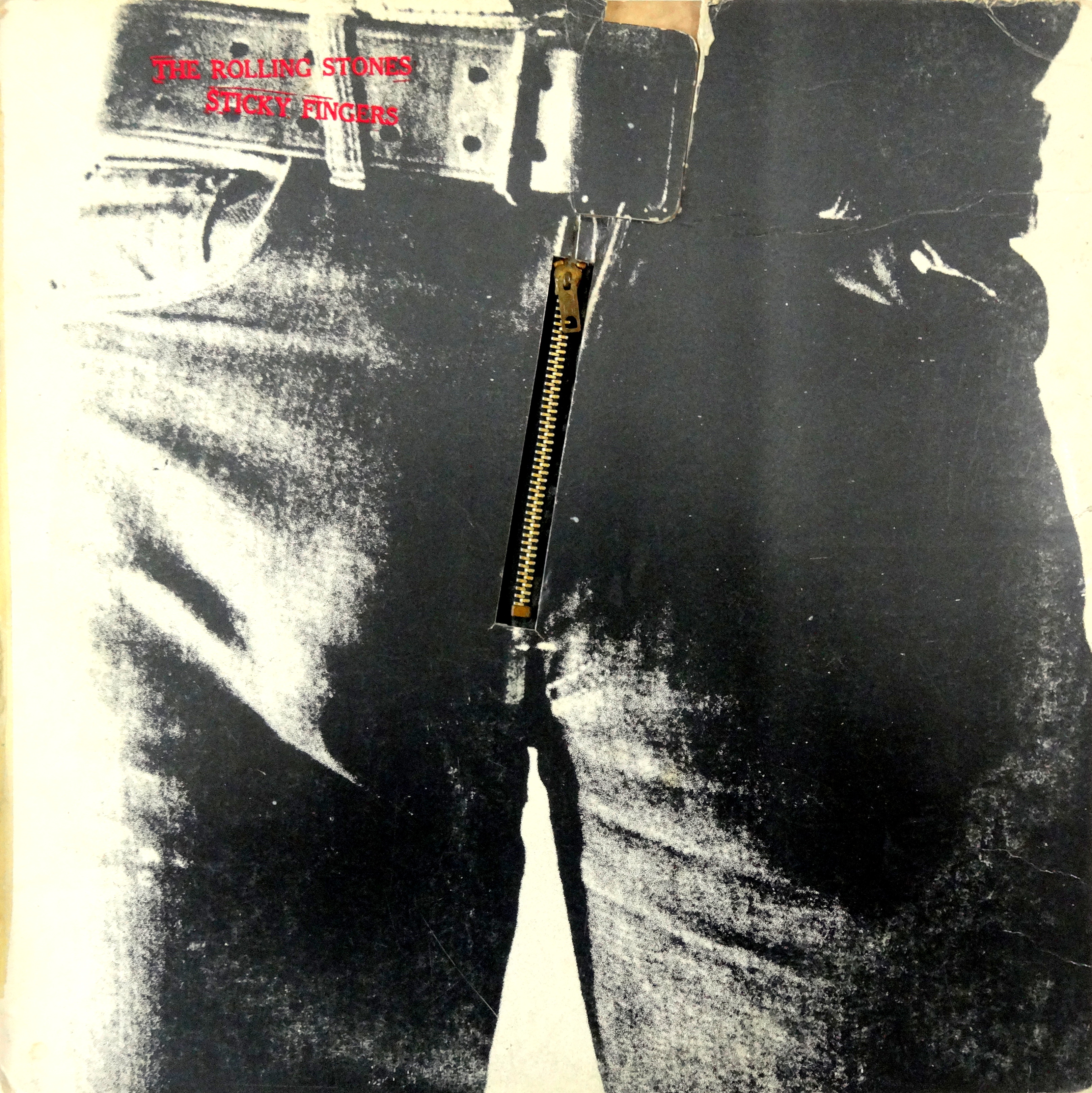
The rather creepy Terry Gilliam-like head jawing away in the video is the actual album cover from the vinyl release. Novelty sleeves like this were in style back then – the Rolling Stones released Sticky Fingers with a real working zipper incorporated into the shot on the cover – and I can recall playing idly with our copy of Ooh La La in just the same way.
Song of the Day: Dream Academy – Please, Please, Please, Let Me Get What I Want (June 14, 2018)
All I knew about The Smiths, back when they were making a splash, was that they had an album called Meat is Murder, which didn’t sound all that promising. I never heard a thing they recorded, and thus found myself unfamiliar with the fascinating and enchanting melody of the instrumental with which John Hughes scored the museum scene in Ferris Bueller’s Day Off. It was a beautiful part of a beautifully unforgettable cinema moment, and I gathered from the credits that it must have been performed by the Dream Academy, a group then best known for the hit Life in a Northern Town. It sounded just like them from the arrangement, with its big studio echo and woodwind accompaniment, but I misidentified it as another Dream Academy song, The Edge of Forever, also used in the movie and listed in the credits. This was back way before streaming, iTunes, YouTube, Shazam and the like. I searched for it high and low for a while before giving up – frustratingly, there never was a soundtrack album for Ferris Bueller – and loved it every time I rewatched the movie on my blurry, low-fi VCR.
I don’t remember where I finally heard the original. Maybe my brother played it for me – I’ve found my way to a lot of my favourite music through him. It wasn’t an instrumental, and it wasn’t by the Dream Academy. It was the Meat is Murder guys. I soon discovered that Smiths band mates Morrissey and Johnny Marr were composing some of the most flat-out gorgeous pop songs I’d ever heard, like How Soon is Now, There is a Light That Never Goes Out, and best of all, discovered at last, Please Please Please Let Me Get What I Want, which clocked in at less than two rapturous minutes.
The version attached above is a vocal rendition by the Dream Academy, whose typically lavish studio treatment might seem a little too slick and glossy for some, but for this song sounds fitting to my ears. They make it last more than two minutes, and that seems appropriate too. Attached below is the museum scene, and the Dream Academy’s instrumental version.
Ferris Bueller takes place in Chicago, and the museum he and his friends are visiting is the Art Institute. It’s not a set made up to look like the Art Institute – it’s the real deal. I’ve stood just where Ferris, Cameron and Sloane are depicted, and been just as moved by the sublime masterworks as the kids are, especially Hopper’s Nighthawks, the portraits of Singer Sargent, and of course Seurat’s A Sunday on La Grande Jatte, in which Cameron immerses himself while Ferris and Sloane get romantic against the backdrop of Chagall’s ineffably beautiful stained glass piece, America Windows.
Nobody who’s seen the movie could visit the museum and pause in front of the Seurat without being reminded of Cameron, who stares ever more intently into the pointillist canvas, the camera zooming in, while the painted image of the child becomes less and less distinct, finally dissolving into splotches of colour that don’t look like anything at all. It’s hard to imagine a better song to serve as the soundtrack to Cameron’s poignant epiphany, as he realizes that the harder he looks at his own life, the less it seems to mean.

 the needlefish